What's a crew to do?

Author: De’Nonna Jones, Forest Releaf

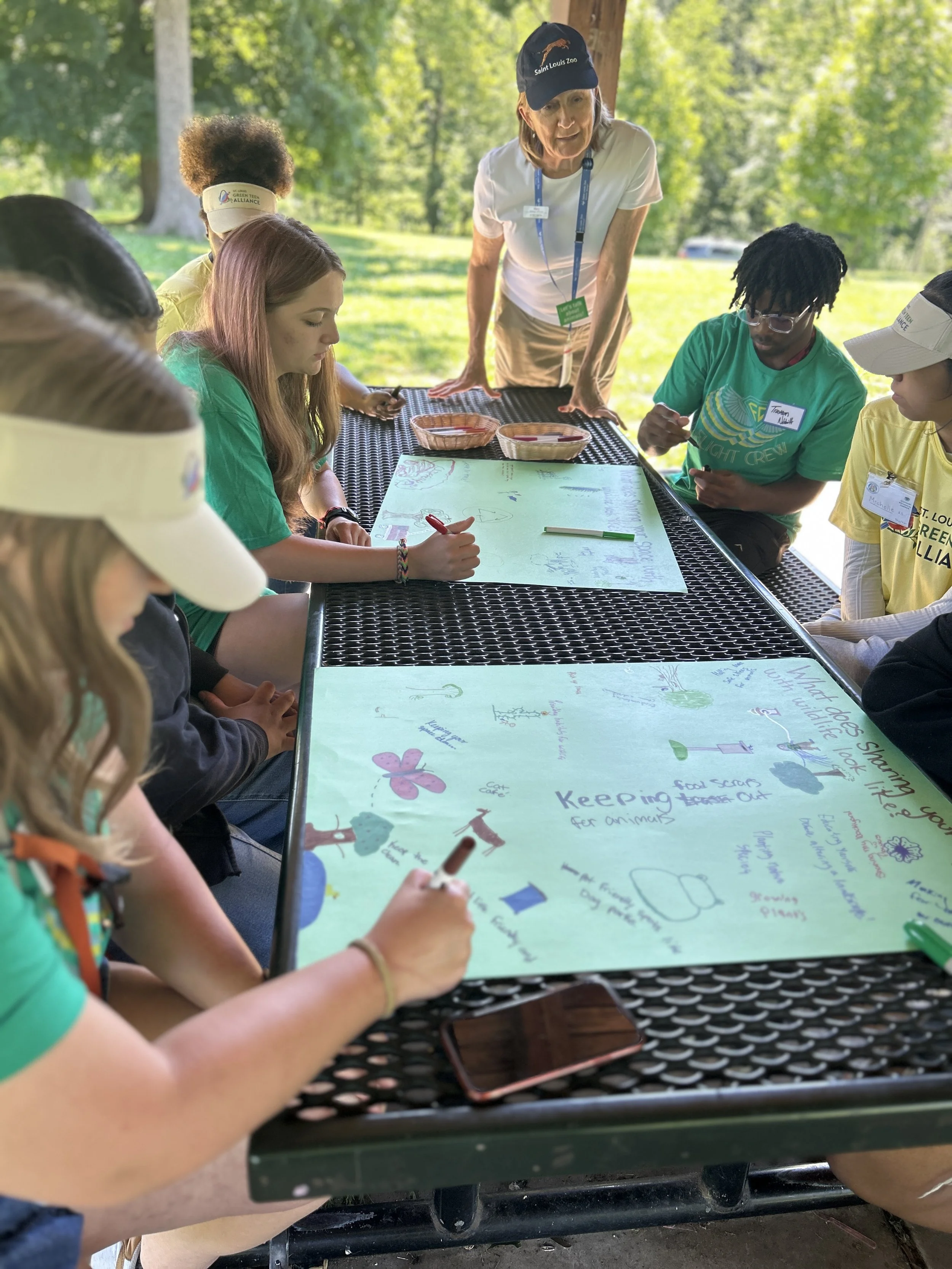
Here at Forest ReLeaf we take pride in the way we care for trees. We spend hours planting trees in the winter and fall and hope to water those same trees (and more) during the summer. During the early weeks of this summer, we were reminded that trees need more than water in order to thrive in urban environments. Let’s dig into what else they might need.  But first, a quick introduction to our stewardship team this summer.

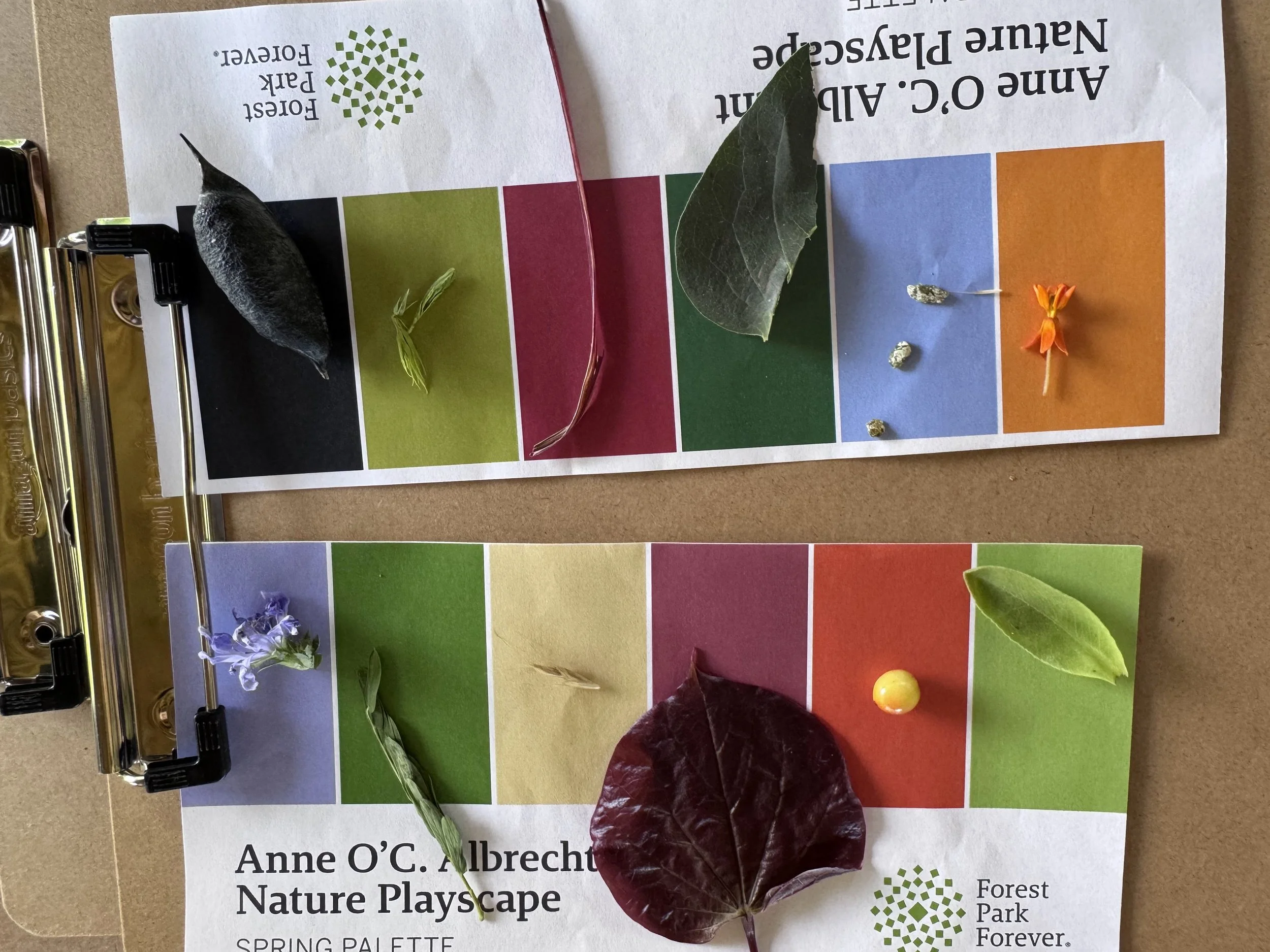
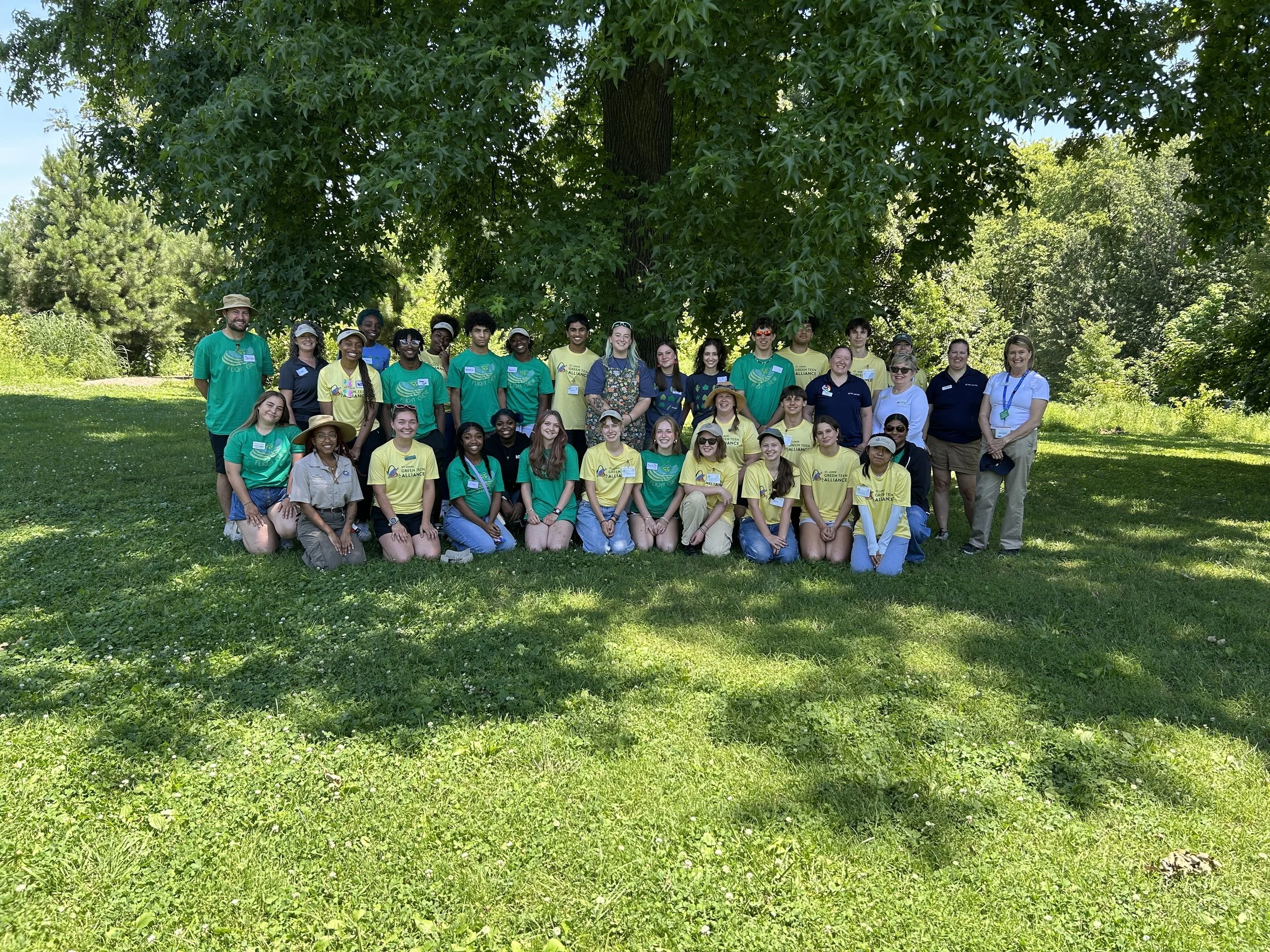
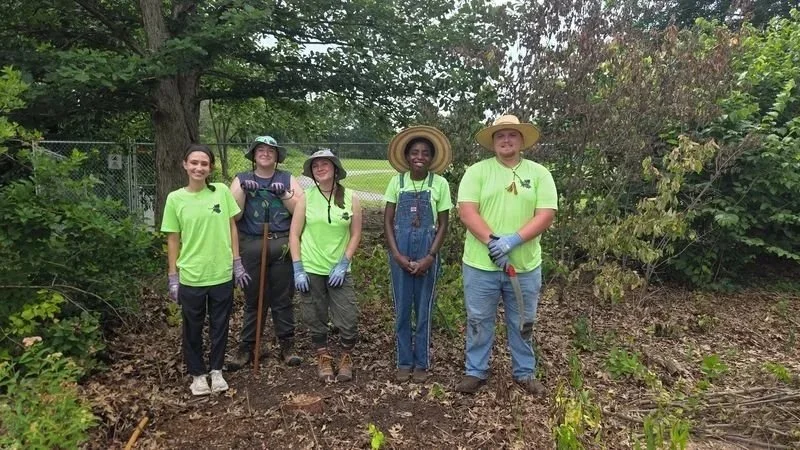
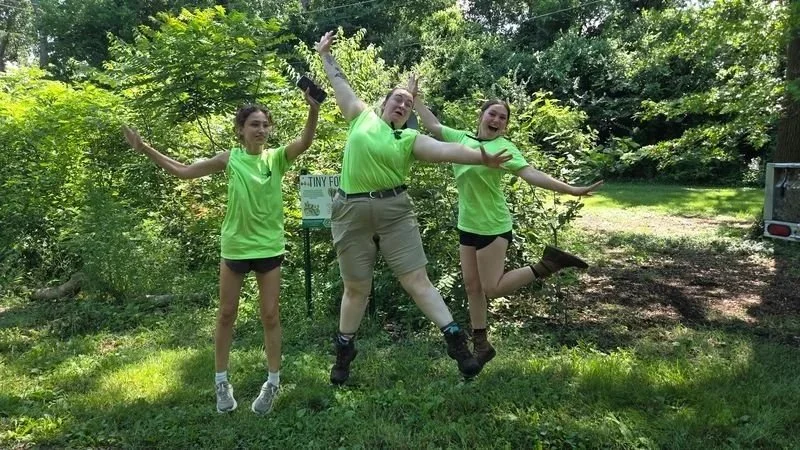
At the end of May, we welcomed Sara Blandina, Quinn Swope, and Liz Schmidt to our canopy crew. We also gave a big welcome back to Sam LaPorte. He is returning for his 4th summer with us, this time as our assistant crew lead. During their first week, the crew spent time learning the in and outs of Forest ReLeaf and what role they would play in supporting our mission of building St. Louis’ urban canopy. We spent time using a dichotomous key in order to identify some of the mature trees surrounding our office. Most of our summer is spent caring for trees that are in the early stages of their lives, so I find it important to engage the crew with trees that are in later stages. The mature trees give us an idea of what we're working towards. When we plant trees in urban parks, we want to make sure that the conditions are near perfect so that it can live a long, healthy life. Every tree we water during the summer was planted in what our forestry manager Billy Haag, refers to as “the million dollar hole”. This is the space that the tree will live in for the rest of its life so it’s important to give it a good start. From there, it's up to our canopy crew to nurture these trees during times of stress, specifically a hot summer in St. Louis, MO. 

Each week we water over 1,000 trees. We give each tree 10 gallons of water a week. This is what we told the canopy crew in their interviews and what we prepared them for during orientation week. However! Nature had other plans. There is only 1 condition where we do not have to water a tree and that is when it rains at least 1.5 inches. This condition was met for the first 2 weeks of June, which lead to an unpredictable start to our summer together. For the first few weeks of the season we learned a valuable lesson about working in the green field; the weather does what it wants. As inconvenient as it was for us, it was a huge help for the trees and for that we can’t be too mad. We are a tree centered organization afterall. With that in mind, what then, could we do for the trees if watering was covered?

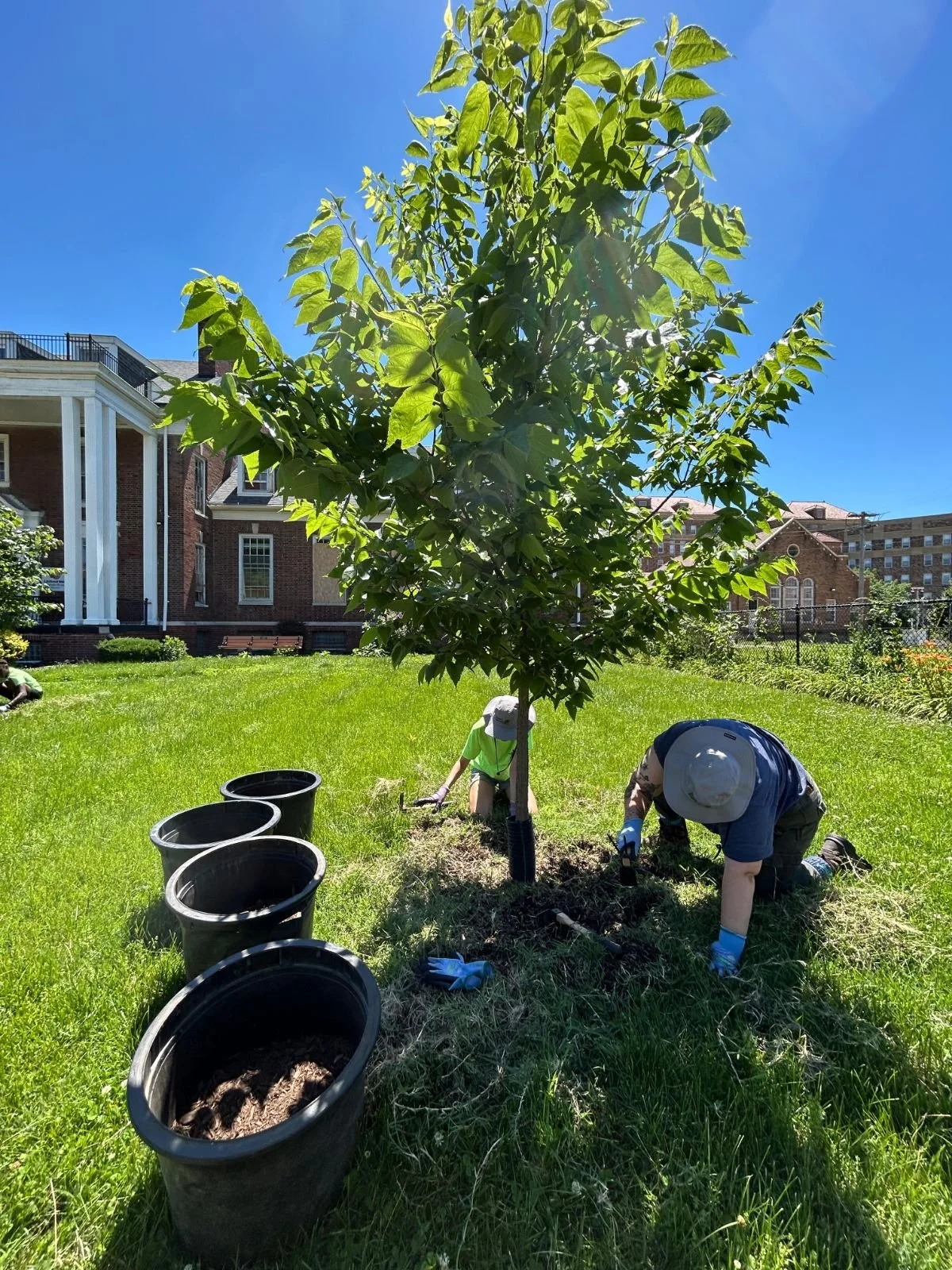
We pivoted to 2 tasks that are just as essential to a tree's survival in an urban environment. The first was building a mulch ring around its trunk. Mulch is very important to the survival of trees that are planted in urban spaces. The mulch ring must follow the 4x4x4 rule in order to be effective. It must spread 4 feet around the trunk of the tree. The outer edge of the ring should end right at the edge of the tree’s drip line or extend a bit beyond it. This creates a wall of protection and visibility for mowers. The ring must be 4 inches deep in order to  suppress weeds which ideally results in there not being a need to bring a mower close to the tree. Lastly, the center of the ring is 4 inches away from the trunk of the tree. This creates a bowl for watering, and allows space for  the trunk to taper. Trunk tapers are essential for the stability of the tree. We spent 2 weeks perfecting this formula of 4 and 4 and 4, over and over again. We now dream of mulch rings, and cringe at the hundreds of mulch volcanoes we see all over the city. 

Another important piece of tree planting is data collection. We want to make sure that the trees we plant are still there when we walk away. When the mulching is done, we spend the afternoon performing inventories. That means visiting the parks where we planted trees over 3 or more years ago, and making sure they haven’t walked away. We take note of their health, their mulch rings, and if they look as if they have been cared for. This data helps us to keep track of our mortality rates and our overall tree happiness. If a tree has survived 2 years, it'll survive at least 50 more right? Right??

These past few weeks we learned how to play on a team with mother nature herself. She took care of the watering, while we took care of mulching and documentation. We love teamwork! For the rest of the summer, we will continue this trade off with mother nature. She’ll provide the sunshine for the trees and we’ll water them. We are looking forward to a summer of watering! 

Volunteering is More Than a Chore

Volunteering is More Than a Chore

By the Forest Park Forever team

Volunteering isn’t just a way to reach your service goals. It can help you learn more about yourself and your interests and make a meaningful difference in your community. 
 You might find you have a passion for nonprofit or ecological work, or you could discover an interest or hobby you’d never considered before. The gift of your time and service could even help you figure out which career path you want to take.  
 Forest Park Forever, part of the coalition that created the Green Teen Alliance, relies heavily on dedicated community members who provide the most precious resource of all: their time. 

Volunteers removing woody material from a forested area

Volunteers planting plugs (small, immature plants) in Kennedy Forest

Who is Forest Park Forever? 

We are a private nonprofit conservancy that partners with the City of St. Louis to restore, maintain and sustain Forest Park for a diverse community of visitors to enjoy, now and forever. Since our founding in 1986, we’ve been fulfilling our mission thanks to members, individual donors and dedicated volunteers. 
 

We couldn’t accomplish our goals and improve Forest Park year after year without volunteer support. Last year, 1,911 individuals gave a total of 11,840 hours, which is valued at a remarkable $411,931.*

How Can You Help Forest Park?

Forest Park Forever offers many types of volunteer opportunities. Working with our Land Management team, you can get your hands dirty planting, mulching and weeding. As a Trash and Trails volunteer, you can explore Forest Park while keeping it clean and free of litter. With our Special Events team, you can help with one of more than a dozen annual events that support our fundraising efforts.

There are so many ways you can help in Forest Park! If you are interested in learning more, please fill our volunteer application

A volunteer collecting trash while exploring the Park

Volunteers planting and mulching

*Financial data from IndependentSector.org.

Envisioning Our Climate Future

Envisioning Our Climate Future

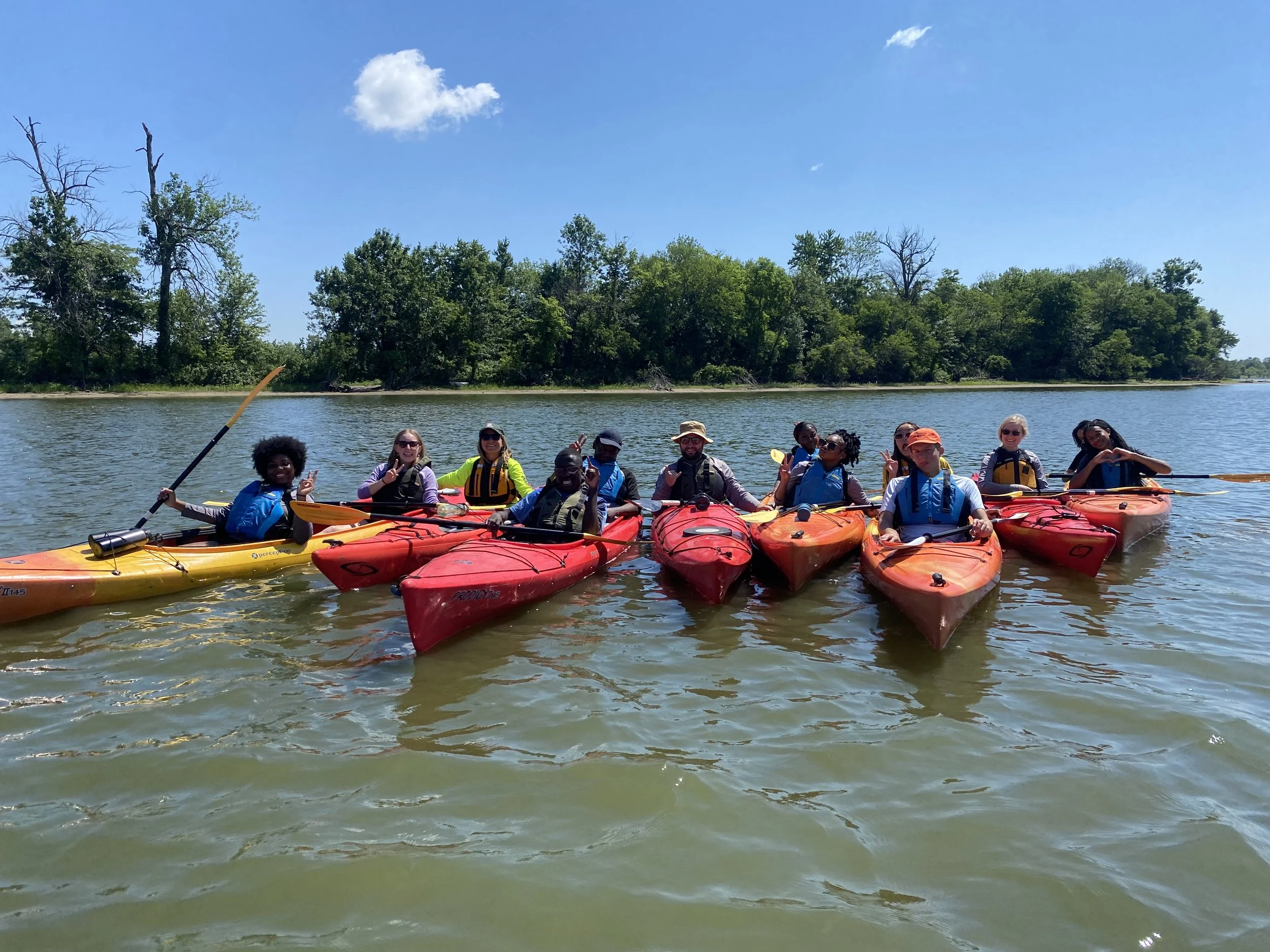
Flight Crew interns paddling in Ellis Bay, along the Mississippi River

Written by Audubon’s Flight Crew interns

I am Herriyah, and I want to go into the field of law.  I am Savannah, and I want to go into international relations.  I am Simon and I want to go into aerospace engineering.  I am Eric, and I want to go be a wildlife biologist.  I am Baily, and I want to be a naturalist.  I am Davia, and I want to be a registered nurse.  I am Damiyah, and I want to be a cosmetologist.  I am Ali, and I want to be an ornithologist.  I am Taylor, and I want to be a real estate agent.  I am An, and I want to be a sports medicine doctor. 

To each of us, defining what a climate leader is and our reasoning for being a climate leader ends up being pretty much the same.  It’s someone who actively and justifiably acts upon instinct in order to renew and adapt to environmental changes.  Because some people may not know why we should protect nature and the climate, a climate leader is also someone who educates people on what the climate is and why we should protect it.   

We plan to incorporate climate leadership in our careers.  Herriyah’s choice of law was a no-brainer, due to her desire to serve an active role in both her community and environment.  Savannah’s field of international relations was one that inspired her to search for knowledge amongst different cultures and ensure international environmental protection.  With a future career in aerospace engineering, Simon’s end goal is to ensure the spread of knowledge regarding ecological change.  Eric believes that being a wildlife biologist will allow him to work within the environment in addition to learning how animals and people can properly live with nature without unnecessary damage.  As a future registered nurse, Davia believes nursing and nature are intertwined through their impact on the environment, health, and well-being as well as their complementary role of being able to promote both individual and ecological health.  To Bailey, the climate and the earth are very important to her.  Thus, as a naturalist, she wants to take steps to further educate the public on environmental issues and show them how to be a climate leader.  Although Damiyah plans on being a cosmetologist, a job that is usually considered out of the green space, she understands the importance of being a climate leader and has planned accordingly, such as buying animal-friendly products.  Ali plans on pursuing ornithology (the study of birds) to sustain bird sanctuaries while educating the public about the vital roles birds play in our daily lives.  Taylor plans to use real estate to promote environmental-friendly alternatives to housing while An plans to utilize the environment to supply patients with healthy medical alternatives. 


Being a climate leader can come in small steps.  Something as small as being mindful of overconsumption and monitoring individual usage of dangerous materials can improve environments.  Swapping out things such as plastic cups, utensils, and straws for more ecofriendly options; carpooling to reduce carbon emissions, and engaging in their communities' ecological needs are all ways of being a climate leader. 

The impact from successful efforts from climate leaders can be seen at the local level.  The Natural Resources Defense Council (NRDC) recognized former mayor of St. Louis, Lyda Krewson as an exemplary leader in the fight on climate change. Krewson signed the Solar Readiness Board Bill that advanced the use of solar energy in St. Louis. This bill represented the first piece of climate legislation proposed since the City became a recipient of the American Cities Climate Challenge award. Krewson used her role as mayor to lead the public on alternative energy usage.  Additionally, Mayor Slay signed the Global Covenant of Mayors for Climate and Energy.  St. Louis earned all of the badges to prove environmental commitment and encourage execution of the environmental plan. Slay also used his role as mayor to educate the public.  

Similarly, Flight Crew is an educational summer internship that teaches high school and recent-high school graduates about environmental conservation and restoration. These interns will go on to counsel children and pass their knowledge down to them, including how everyone can be climate leaders. As summer counselors, the interns will strive to be represent climate leadership to their campers in addition to making camp a fun and educational outdoor experience. 


Seeds of the Past and Growth of the Present

Seeds of the Past and Growth of the Present

By: Quinn Swope, Summer Outdoor Youth Corps Intern, 2025

Alternative Spring Break program 2022, astounded by wintercreeper

If you had told me four years ago that I would be in the position of Outdoor Youth Corps (OYC) Summer Intern, I would have gotten a chuckle out of that. However, 2025 Quinn Swope, AKA me, is viewing this position as a major landmark in my life. With that said, hello! I am the 2025 Summer OYC Intern! I have been with OYC since 2022, when I joined the Alternative Spring Break program and spent five days in cold, rainy, and muddy weather, digging up wintercreeper (Euonymous fortunei) in Tower Grove Park. I did not know then that it was love at first sight. From that single season unfolded seven more seasons of comradery, fun, work, and most importantly, a path forward. Before OYC, I did not have a clue about my future. I pondered being a lawyer, I explored joining the Airforce, but nothing stuck. Working with my hands always had an appeal, and nature was something I had always grown up with. All it took was an AP Environmental course, a beautiful trip to Oregon, and one week working in some unfortunate conditions to ignite the spark for the love that I have for the environment. From OYC, I have gained so many skills that have supported and benefitted me on my current path. I am currently earning my associates degree in horticulture at St. Louis Community College Meramec campus! 

GreenTeen Alliance Basecamp, Summer Crew program 2023

What I did not know going into OYC was that I would be introduced to other organizations with similar purposes within St. Louis, also connecting youth and young adults to green career pathways. The Green Teen Alliance (GTA) brought me into proximity with organizations that I did not even know existed. One of my favorite groups to work with is the Flight Crew with the Audubon Center. They have always been so kind and accepting, and I loved getting to talk about our different responsibilities and projects. Meeting the other GTA organizations at events such as the 2024 Career Summit provided me with experiences I will always carry with me, such as learning what my preferred work conditions are, and learning to use non-verbal communication to better my reflective thinking skills. However, the best thing that GTA offered me was an introduction to future careers. In high school, there is always such an emphasis on IMMEDIATELY knowing what you want to do for the rest of your life.  Gaining knowledge of so many different careers in the green industry was extremely eye-opening and clarifying. For instance, working with Forest ReLeaf introduced me to the world of urban forestry. I had not realized that forestry was more than timber harvesting and ecological considerations: it has to do with community, something all of us have in common. Having similar interests among the peers I interacted with at the GTA Career Summit gave me a sense of belonging and happiness, something that I had not realized was missing from my education and career journey. 

Water Ecology with the Missouri Department of Conservation, Summer Crew program 2024

Looking at the past, I can appreciate GTA and OYC much more. What I thought had just been a one-time experience in my life has turned into something resembling a mycelium network: a connected communication web in which I, and many others, can utilize to educate us and be introduced to a beautiful world of green jobs. Though I still do not know my exact future, I am at least certain that I have the resources to experiment, explore, and conquer whatever comes my way. 

Tree healthcare assessment with Forest Releaf, Summer Crew program 2024

I am so incredibly excited for this summer, and so incredibly thankful that I have been given the opportunity to help others find their way forward. GTA Basecamp this year is especially exciting because there are different themes to engage with. This summer, there is a theme of connecting nature, history, and St. Louis with the World’s Fair. As someone who believes history is one of the most important subjects AND the most interesting, I think that the participants will have a blast! The Career Summit will be even more beneficial to me now than ever, considering I am graduating within the year, and need to forge my own path forward. To anyone reading this who is unsure about their career, or even what they are interested in, PLEASE consider applying for any of the GTA programs. All of them have something unique to offer, and the community is genuinely one of the best I could ever ask for. There is a “growth” mindset (pun intended) among everyone, which allows ideas to flow and lightbulbs to go off! I cannot wait to see what this summer brings, both for myself and everyone who takes part. Let the growth start here!

Green Teen Alliance Career Summit, Summer Crew program 2024

Outdoor Youth Corps 2019

Hi! We’re the Outdoor Youth Corps, and this is a glimpse of what we do on an average day. This selfie is from the first field trip we ever took outside of the garden, to help the North Side OYC remove invasive species at Greenwood Cemetery. This was in one of the first weeks of the program, and even though we didn’t know each other very well, we still had a great time! Greenwood Cemetery was established in 1874, and was the first non-denominational African American cemetery in St. Louis. At over 30 acres, the restoration effort has been difficult, and mostly been supported by the efforts of one man, Raphael Morris. He founded the Greenwood Cemetery Preservation Association, which coordinates volunteers (like us!) from across the area to restore and honor this historically significant place

oyc1.jpg

One of our main projects of the summer was to remove wintercreeper and English Ivy from an area in the garden. It was really hot out and hard to pull the invasive species- in this picture Marquis was stuck in some winter creeper while he was trying to kick it out. We ended up getting the whole area pulled and most of it mulched. The garden plans to plant native species there next year.

oyc2.png

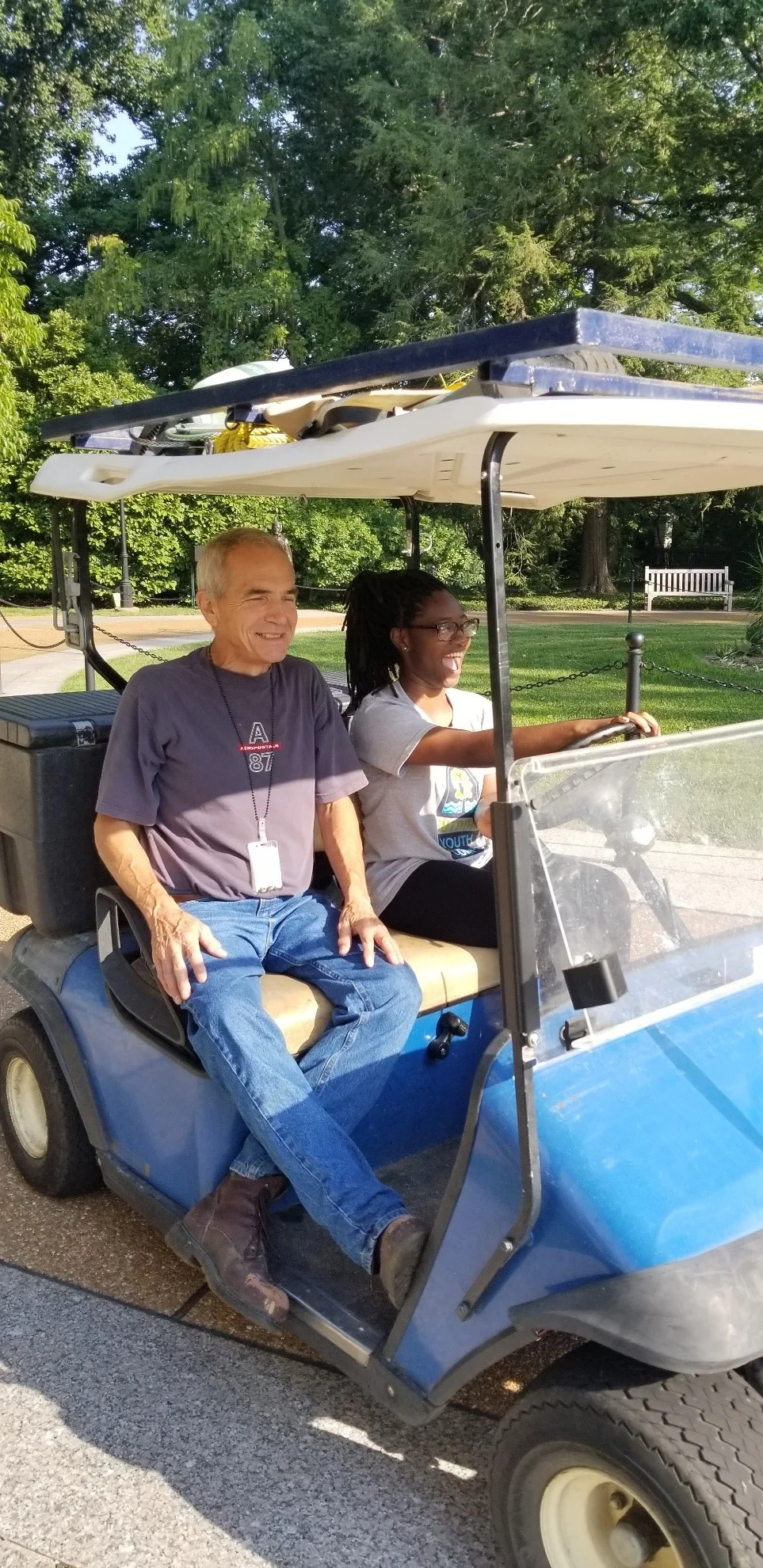
We spent some days this summer with Kevin who works in General Services. In this picture, he and Sandy were driving around the garden in this golf cart. We have done a lot of things with Kevin like power washing a bus station and using rotary hammers to break down bricks. On that specific day we also measured the grade of some parts of the garden by shooting transit.

oyc3.jpg

On this day we were at Bellefontaine Cemetery building a nice long trail. We had to pay attention to the curve of the land so that when it rains all the water can just flow down and off to the side of the trail we made. Most of the tools we used were hoes, hard rakes, shovels, Mcleods, and Pulaski’s. Our goal was to get as much of the trail done as we could during the 2 days we worked on it.  

oyc4.jpg

One of the best days we had this summer was when we went to the Busch Wildlife Conservation Area. We worked with two people on the fisheries crew doing surveys with electrofishing and seining. In this picture, we are identifying some of the fish we caught. We ended up catching 17 different species of fish that day.

oyc5.jpg

Favorite Forest Park Moments from NatureWorks 2019

The 2019 NatureWorks crew, employed by Forest Park Forever to restore riparian buffers along park waterways, compiled the following photo essay capturing each crew member’s favorite moment from the season. Enjoy!

Kriston enjoyed turtle tracking with the St Louis Zoo using radio telemetry.

Kriston enjoyed turtle tracking with the St Louis Zoo using radio telemetry.

Kris lead the partnership with Gorilla 76 (a FPF volunteer group) to remove carpet grass on Picnic Island

Kris lead the partnership with Gorilla 76 (a FPF volunteer group) to remove carpet grass on Picnic Island

The crew removed invasive species from one of the islands along our waterway. Noah wanted to show the progress we made with before and after photos.

The crew removed invasive species from one of the islands along our waterway. Noah wanted to show the progress we made with before and after photos.

Amazing!

Amazing!

Kaliyeha’s favorite trip was to Tyson Research Center in which we got to explore a WW2 bunker.

Kaliyeha’s favorite trip was to Tyson Research Center in which we got to explore a WW2 bunker.

Juan shows us a rainbow at the Botanical Gardens during the GTA Career Summit.

Juan shows us a rainbow at the Botanical Gardens during the GTA Career Summit.

CrisTasha looks back at the rainy days on Wildlife island showing off our stylish raingear.

CrisTasha looks back at the rainy days on Wildlife island showing off our stylish raingear.

Eugene spotlights our time processing the native seed species we collected out in the park

Eugene spotlights our time processing the native seed species we collected out in the park

Eva snapped a picture of a macroinvertebrate sample found within the waterway.

Eva snapped a picture of a macroinvertebrate sample found within the waterway.

"There is so much to be interested in when you step outside": YES teens help kids reconnect with nature

20190716_103753.jpg

What is the YES Program at the St. Louis Science Center? “YES” stands for Youth Exploring Science. The YES Program gets kids from the ages of 14 to 18 engaged in science, technology, engineering and math. The program consists of teens teaching kids younger than them (down to the age of 4) about STEM. The teens use many different activities that keep the younger kids intrigued. YES has a range of various classrooms, broken into what we call “components”. One of those components is Agriscience.

What have the teens in the Agriscience component been doing this summer? I'll tell you. The YES teens have been trying to help kids embrace their inner instinctual side. Do you remember when you were a kid and were fascinated by the simple complexities of the outdoors? Worms could keep me occupied for at least an hour. Me and my brother would find cool looking sticks and be outside for hours just using our imagination. There is so much to be interested in when you step outside. It’s in our human nature to be fascinated by the outdoors. Somewhere along the lines of growing up, people stop spending so much time outside appreciating the cool little things that nature can offer. Playing with worms and insects goes from the coolest thing ever to being absolutely “gross”, making things out of stuff in the backyard becomes “weird”, and pretending to sword fight with sticks gets labeled as “lame”. This summer, the Agriscience YES teens have been helping kids stay connected to their nature loving instincts by teaching them in the outdoors.

On Tuesdays and Wednesdays, the Teens go offsite to a nature reserve in Ladue. The Litzinger Road Ecology Center is home to hundreds of different plants and a range of different animals. The teens get new kids every day. They start off giving a tour of the nature reserve, then come back to an outdoor classroom to teach the students. Research shows that there is a correlation between nature and learning. Being out in nature can actually help kids learn more effectively. The teens teach activities involving observation of skulls and insects. The Skulls activity is to teach kids about the differences between predators and prey. The kids are led to touch and observe the skulls. They try to guess what animal the skull came from by using what they have observed. The teens also teach an activity that has to do with the distinction of insects. The kids are taught about the different body parts that insects have, then prompted to make their own insect. The kids have multiple choice options when it comes to what material they can use. So the kids leave with a higher understanding of animals adapted to their food chain, and what body parts make up an insect. On top of that, the kids leave feeling more comfortable with being outside and inside nature. Not only do the teens get to experience the best parts of nature, but they get to give younger kids some of their best early nature experiences as well.

Atajio Ivy is a 2019 Youth Exploring Science teen with the St. Louis Science Center. To learn more about Youth Exploring Science, visit their website.

I Never Knew There Were So Many of Us: Audubon's Flight Crew Reflects on Joining the Green Teen Alliance

This is the first summer that the Audubon Center at Riverlands’ youth employment program, Flight Crew, is joining the Green Teen Alliance. Below, crew member Arrow (back row, third from left in photo above) reflects on the experience:

“I’m Raven and I go by Arrow (my camp name). I am 17 years old and I just graduated from Hazelwood East High School. I am a part of the Flight Crew program by Audubon Center at Riverlands. We also partner with Little Creek Nature Area to provide a three week summer camp for kids in the Ferguson-Florissant School District. This is my second year as a camp counselor but first year as a Flight Crew Member and member of the Green Teen Alliance. 

My first introduction to the Green Teen Alliance was from being a Flight Crew Member. With my team, in June of 2019, I went to Forest Park in order to meet the larger group of Green Teen Alliance teenagers (maybe 60-70 of us?). I never knew there were so many of us that were interested in working outdoors but seeing us together allowed me to have more hope and faith in our execution (not just our potential) to positively and purposefully change the environment! In one day we learned (more) about community issues, like water quality and food deserts, and discussed possible solutions. One solution we discussed for water quality was establishing a healthy amount of riparian buffer next to our rivers and streams.

I am not only able to learn but, through my role as a counselor at Little Creek Summer Camp, my peers in Flight Crew and I are able to educate the youth that look up to us as their role models. Inspiring them to possibly work outdoors, too. The campers are diverse. We get to expose our fellow people of color to the outdoors, making the project and purpose of working in nature more popular and shared throughout different cultures. I love my job! “

Crew member Alayna Abel adds more:

“My name is Alayna Abel. I am 16 years old and will be a junior at McCluer North High School in the fall. I love being a member of Flight Crew. Our program is 8 weeks long. During the first  five weeks we focus on conservation and doing projects to beautify the earth. We joined the Green Teen Alliance which was a great experience. Groups of teenagers that are nature based come together and build bonds with each other. One day, Flight Crew went to Forest Park to help the Nature Works crew clear their riparian buffer zone of ragweed and honeysuckle. We were all super hot, sweaty and itchy but in the end we got a lot done and helped improve the park. It was a very satisfying experience. I highly recommend working in nature, it brings out an amazing side of you that you never expect seeing!”

St. Louis Post-Dispatch: "Summer internships give teens a taste of environmental jobs"

Wowee, we have been busy this summer! For a little preview of what we’ve been up to, check out this St. Louis Post-Dispatch article highlighting the Green Teen Alliance’s 2019 work:

https://www.stltoday.com/business/local/summer-internships-give-teens-a-taste-of-environmental-jobs/article_49c0dcb4-c54e-5bc8-99d7-78bf5cf2b224.html

The Outdoor Youth Corps hard at work!Photo Credit: Laurie Srkivan, St. Louis Post-Dispatch

The Outdoor Youth Corps hard at work!

Photo Credit: Laurie Srkivan, St. Louis Post-Dispatch

NatureWorks Applications Open For 2019!

Happy 2019! As we meet throughout the winter to prepare for the next season of the Green Teen Alliance, we’re still reminiscing about all of last summer’s successes. We’re basking in the glow of memories and quotes like this one, posted by NatureWorks, Forest Park Forever’s youth employment program, over the summer:

“Working in Forest Park has been an experience that I won’t forget. My first job started my career on the right foot. I am forever grateful to Forest Park Forever, the other supporters and the Green Teen Alliance for that.”

Read more at the link below:

https://www.forestparkforever.org/blog/2018/a-chance-to-grow-learn-nature-works-wraps-up-another-successful-year

Does this sound like a perfect opportunity for you, or a young person you know? The application for NatureWorks 2019 is now open! Apply today!

Cultivating Leaders @ EarthDance Organic Farm School

EarthDance's Junior Farm Crew has been growing and changing in 2018! EarthDance wanted its Apprenticeship program (usually only open to adults) to work more with the JFC, to build synergy between the youth and adults on the farm. In addition, two young people- Verdis and Robert- were chosen to be the inaugural Youth Apprentices from April-August. They have been loving it!  Verdis aspires to be a farmer, and Robert--an alumnus of the JFC--is always seeking to improve his skills for growing his own food.  In an interview about his time with the JFC, Robert said he enjoyed learning a lot of skills like how to work with the Earth and how to face problems every day. The Youth Apprentices receive free tuition to the Apprenticeship program, and were also paid as employees from April through August. 

The summer-only Junior Farm Crew was comprised of 6 dedicated employees: Atalya, Chris, Ijai, Julian, Meghan, and Nicholas. In addition to farm work, the Junior Farm Crew worked on leadership skills, engaged critical thinking, culinary skills, and public speaking.  The Instagram posts below will let the JFC tell you all about themselves, in their own words.

While the Youth Employment program is coming to a close for 2018, EarthDance looks to 2019 with great excitement and expectation!